Table of Contents
- Item 1
May 27, 2026

.png)
.jpg)
Table of Contents
5
min read
Most Shopify merchants think about growing revenue in one of two ways: get more traffic, or launch new products. Both take time. Both cost money. And neither one helps you earn more from the customers you're already converting.
There's a third option, and it doesn't require you to touch your catalog, your ad spend, or your pricing.
It's about making the most of every order that's already happening.
Average Order Value (AOV) is simply the average amount a customer spends per transaction. For most Shopify stores, the AOV benchmark sits somewhere between $85 and $92. The top 20% of stores push that above $109. The top 10% exceed $120.
That gap matters more than it looks. A 20% jump in AOV, without one extra visitor or one extra product, means 20% more revenue from everything you're already doing. Your ads work harder. Your fulfillment costs get spread over a bigger basket. Your margins improve.
The question is: what actually moves that number?
Of all the tactics out there, one consistently outperforms the rest: a free shipping threshold paired with a progress bar.
It sounds almost too simple. But the data backs it up.
Research shows that 90-93% of shoppers will add items to their cart specifically to qualify for free shipping. Around 58-80% of them actively do it. A case study on an FMCG retailer found that adding a prominent shipping threshold banner alone drove a 3.11% uplift in conversion rate, and pushed orders in the $50-$70 range up by 100%.
Why does it work so well? A few reasons:
It turns a cost into a game. Customers think about avoiding a shipping fee by adding items. They think about reaching free shipping with a small add-on. That's a completely different mental state, converts.
It costs you nothing to start. You're not discounting. You're not running a promotion. You're setting a rule and letting customers motivate themselves.
It works with your existing traffic. You don't need more visitors. You need more from the ones already there.
The recommended setup: place your threshold 10-30% above your current AOV. If your average order is $45, set it at $55-$60. Then make it visible. A dynamic banner in the cart drawer that updates as they add items ("You're $11 away from free shipping!") is far more effective than a static note on the checkout page.
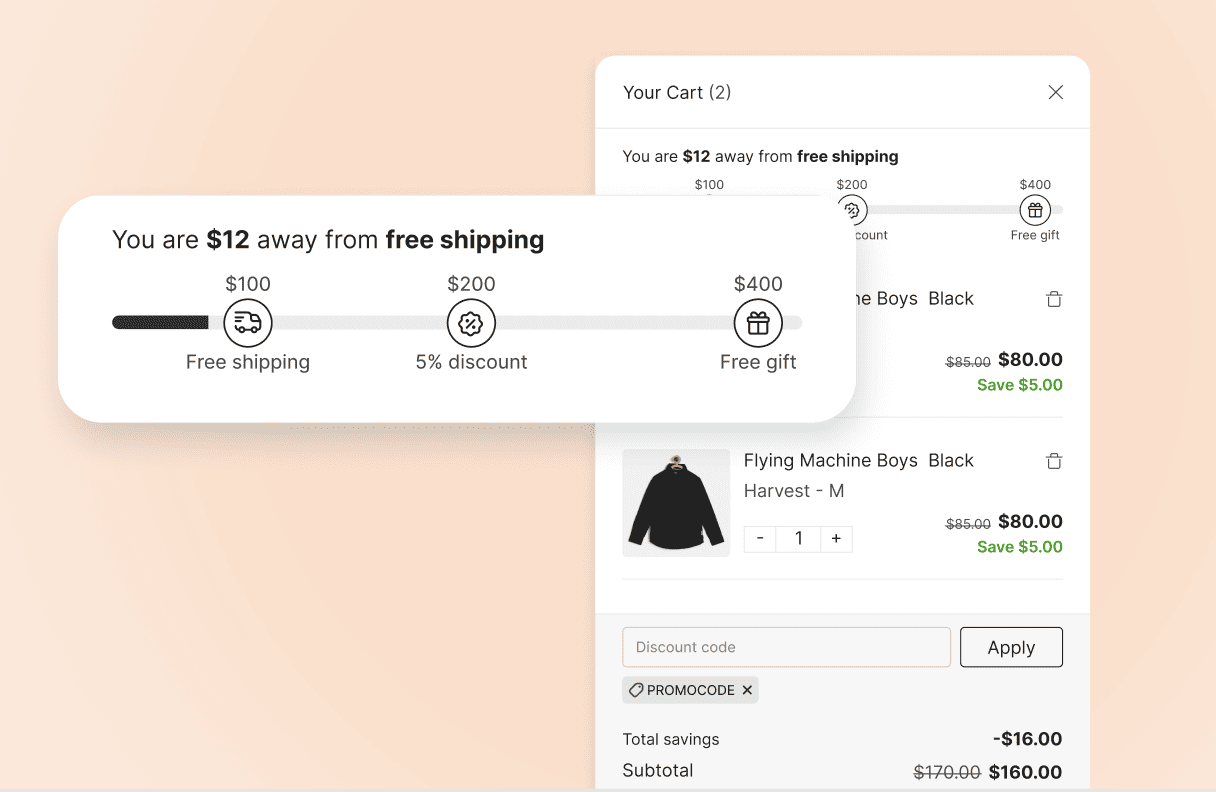
The free shipping threshold is the starting point. But a well-optimized cart can do a lot more.
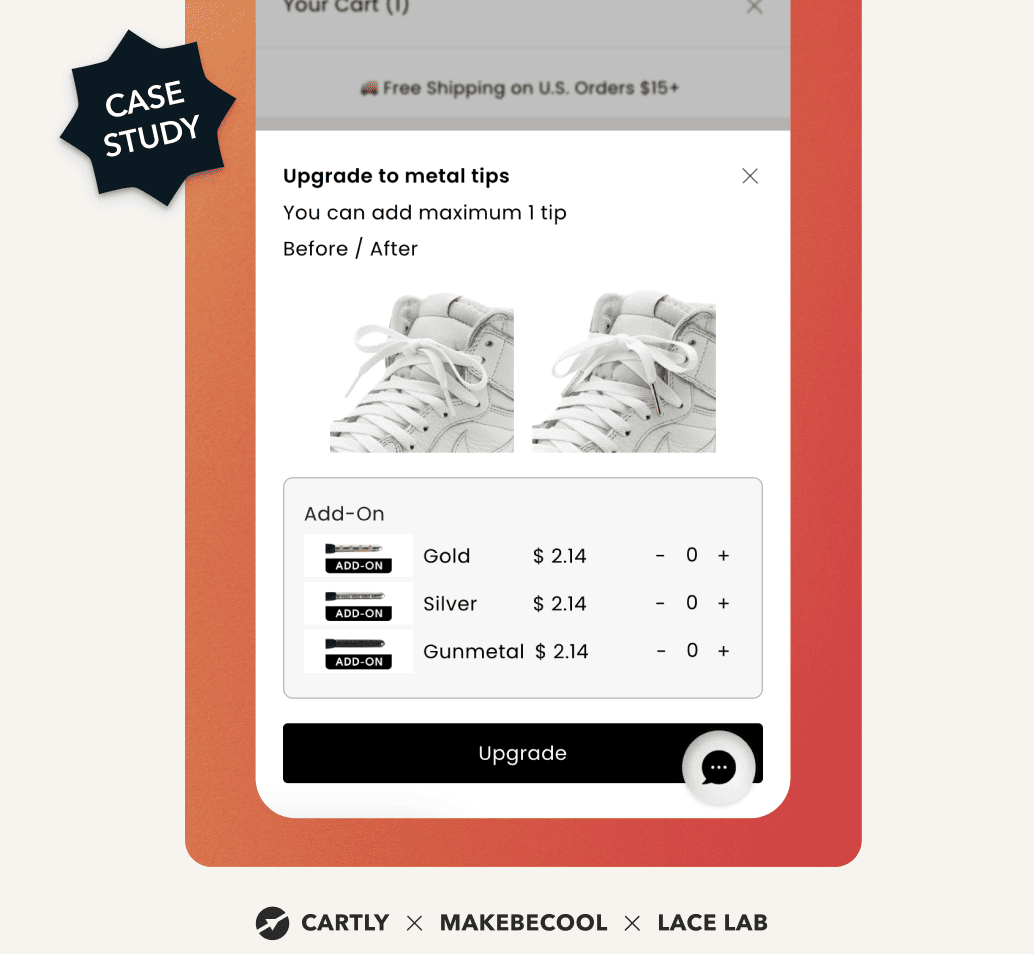
In-cart upsells and cross-sells. Suggesting a low-cost, relevant product at the moment someone is already buying is one of the highest-converting sales moves in e-commerce. Think batteries with electronics, socks with shoes, aglets with laces. These are genuinely helpful. And because the customer is already in a buying mindset, they convert.
Cross-selling and upselling together account for 10-30% of total e-commerce revenue across the industry.
Post-purchase upsells. The moment right after someone completes a purchase is surprisingly powerful. Payment details are in. The decision is made. A relevant one-click offer at this point, where there's zero risk of losing the original sale, can boost incremental AOV by 10-15%.
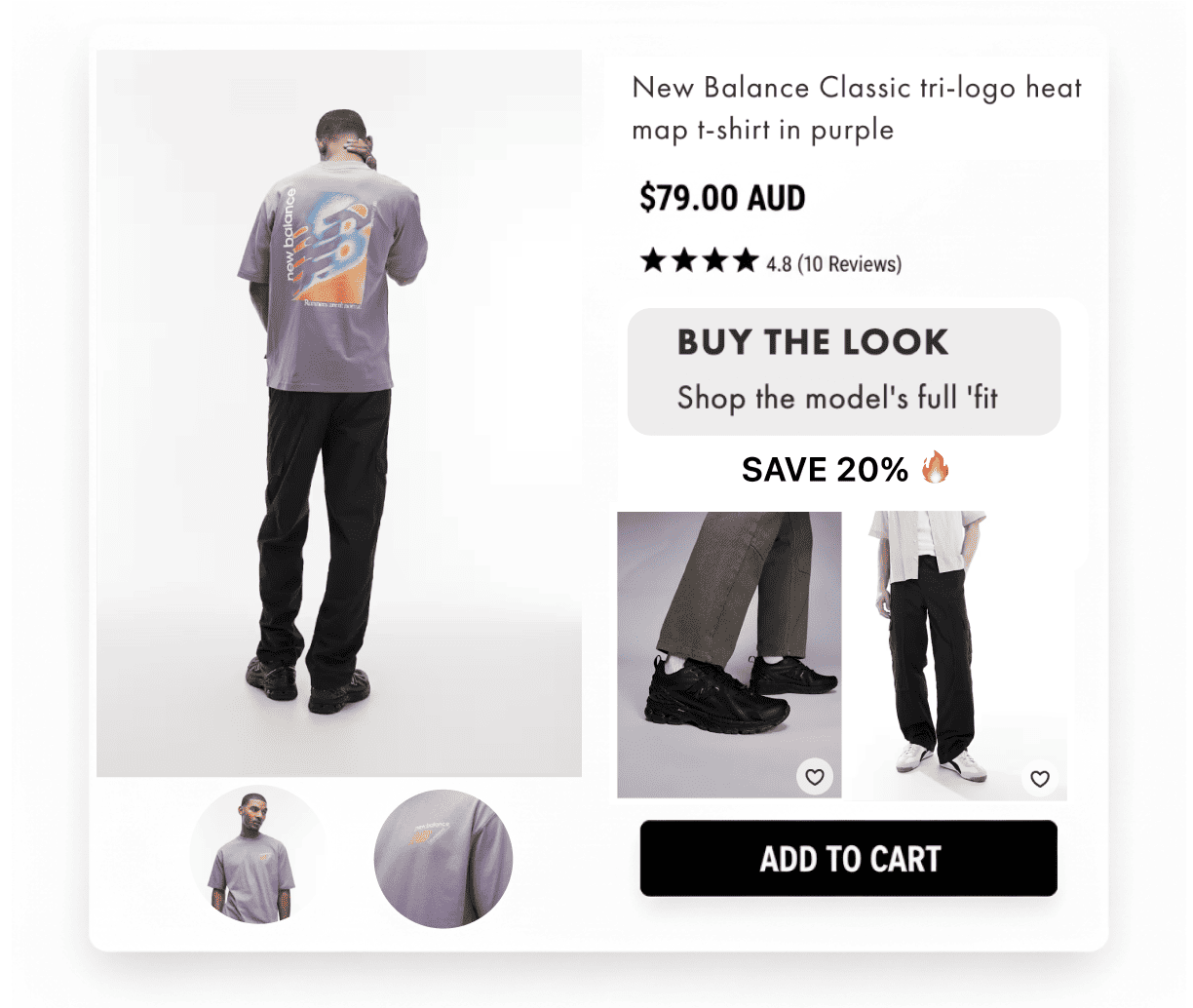
Product bundles. Grouping related products at a slight discount increases perceived value and makes the decision to spend more feel like a win for the customer. On average, bundles increase AOV by 20-30%. Customers who buy bundles also show 2.7x higher lifetime value than single-item buyers.
Numbers are one thing. A real store is another.
Lace Lab sells premium sneaker laces and accessories. Their customers often want to buy multiple colors and styles at once. The AOV opportunity was clearly there. The problem was their cart was working against them.
Add-ons would sometimes fail to attach if a customer clicked through checkout too quickly. Cart behavior would break when items were removed. The experience was unreliable in ways that silently cost them revenue on every affected order.
MakeBeCool, a Shopify-specialized agency focused on custom development and conversion optimization, tackled this in two phases. First, they re-engineered the add-ons logic, fixing the timing issues, ensuring accessories attached to the right line items, and introducing a brief checkout delay to prevent silent revenue loss. Then they brought in Cartly as a structured cart layer to manage upsells and maintain that reliability going forward.
The results, measured within a single quarter:
The lesson from Lace Lab is: upsells convert when the foundation is solid. MakeBeCool fixed the friction first. The growth followed.
📖Read more about the case study to find out how we achieved these numbers.
If you want to move your AOV, a practical order of operations looks something like this:
1. Fix friction before you add features. If your cart has bugs, slow loads, or broken add-on behavior, fix those first. Upsells in a broken cart don't convert. They frustrate people.
2. Set a free shipping threshold. Calculate your current AOV, add 15-25%, and set that as your threshold. Make it visible in the cart with a dynamic progress bar.
3. Add relevant in-cart upsells. Pick 2-3 low-cost products that make sense alongside your best sellers. Keep them simple and self-explanatory.
4. Test before you scale. A/B test your threshold amount and your upsell offers. A threshold set too high can actually hurt conversion. Find the balance where AOV goes up without checkout completions going down.
5. Watch margins, not just revenue. If your shipping costs or offer discounts are eating your gains, you need to know. An AOV increase only matters if it improves profitability.
You don't need new products or lower prices to grow revenue. You need to earn more from the customers already buying from you.
A free shipping threshold with a progress bar is the fastest place to start. Layer in reliable in-cart upsells, cross-sells, and smart bundling, and you have a compounding system that works without touching your catalog or your ad budget.
The stores winning on AOV aren't necessarily the ones with the best products. They're the ones with the best cart experience.
Lace Lab's results were achieved through a collaboration between MakeBeCool and Cartly. MakeBeCool is a Shopify-specialized agency focused on custom development and conversion rate optimization.
In 2010, Andrey founded MakeBeCool initially as a website development agency, but a discovery of the e-commerce world led to a complete retraining. With a newfound passion, he started collecting brand stories and case studies to empower e-commerce success. Beyond work, Andrey is a Lego Technic collector, a passionate snowboarder, runner, and fitness enthusiast. His active lifestyle extends to family time, where he shares his hobbies with his daughters.
View Author's PageOur Shopify Consultant will help you determine the ways of increasing professional growth
%20copy.webp)


